
kEY wORDS
kEY wORDS
Nutrio : A Food Coach App
An AI Food Coach that turns food logs into clear, actionable decisions
Role
UX Designer
Timeline
2 Months
Platform
Android App
Tools
Figma, Slack, Adobe Suits, Monday
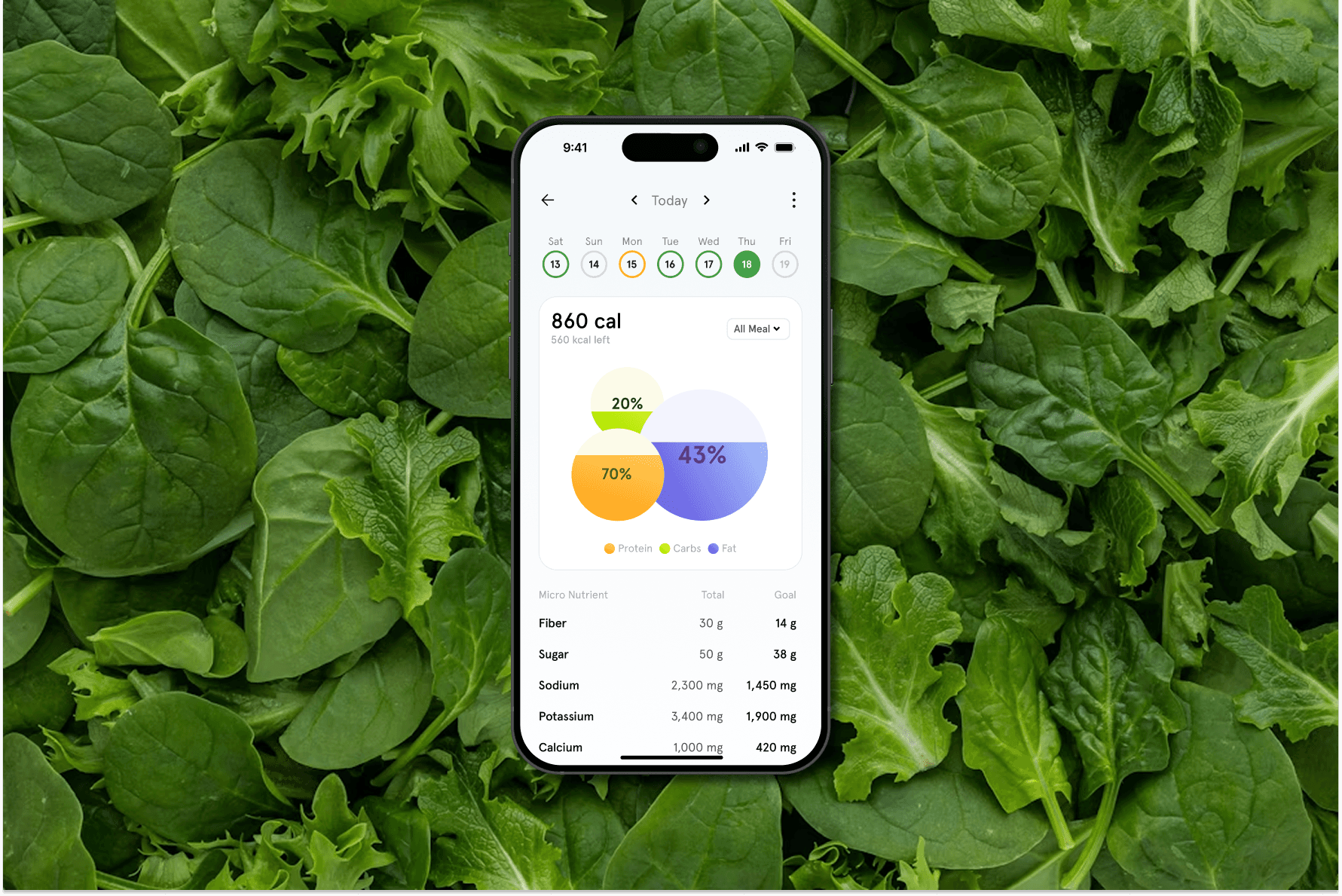
Context & Background
The Missing Piece: From Tracking to Personalized Guidance
In today’s world, many people feel overwhelmed by what to eat—too much information, yet little clarity on what’s right for them
Recognizing this confusion, I dug deeper into what’s missing. That’s when I discovered clear gaps in existing solutions
📊
Overemphasis on Counting, Not Coaching
most apps, around 65%, focus only on tracking calories.
🧩
Personalization: Largely Absent
Only 15% offer personalized guidance
🧭
Users Left Without Direction
80% of users reported feeling unsure how to apply generic advice
Research
The research followed three phases, progressing from broad market analysis to deep user insights, and finally to clear problem framing and opportunity definition.
Phase 1: Understanding the Problem
To understand the problem I’m solving with Nutrio, I walked through the user’s journey—pinpointing where they struggle or feel lost. Once I had the journey mapped, I used affinity mapping to organize key themes from what I learned. Then, I analyzed competitors to see how I could make Nutrio stand out.
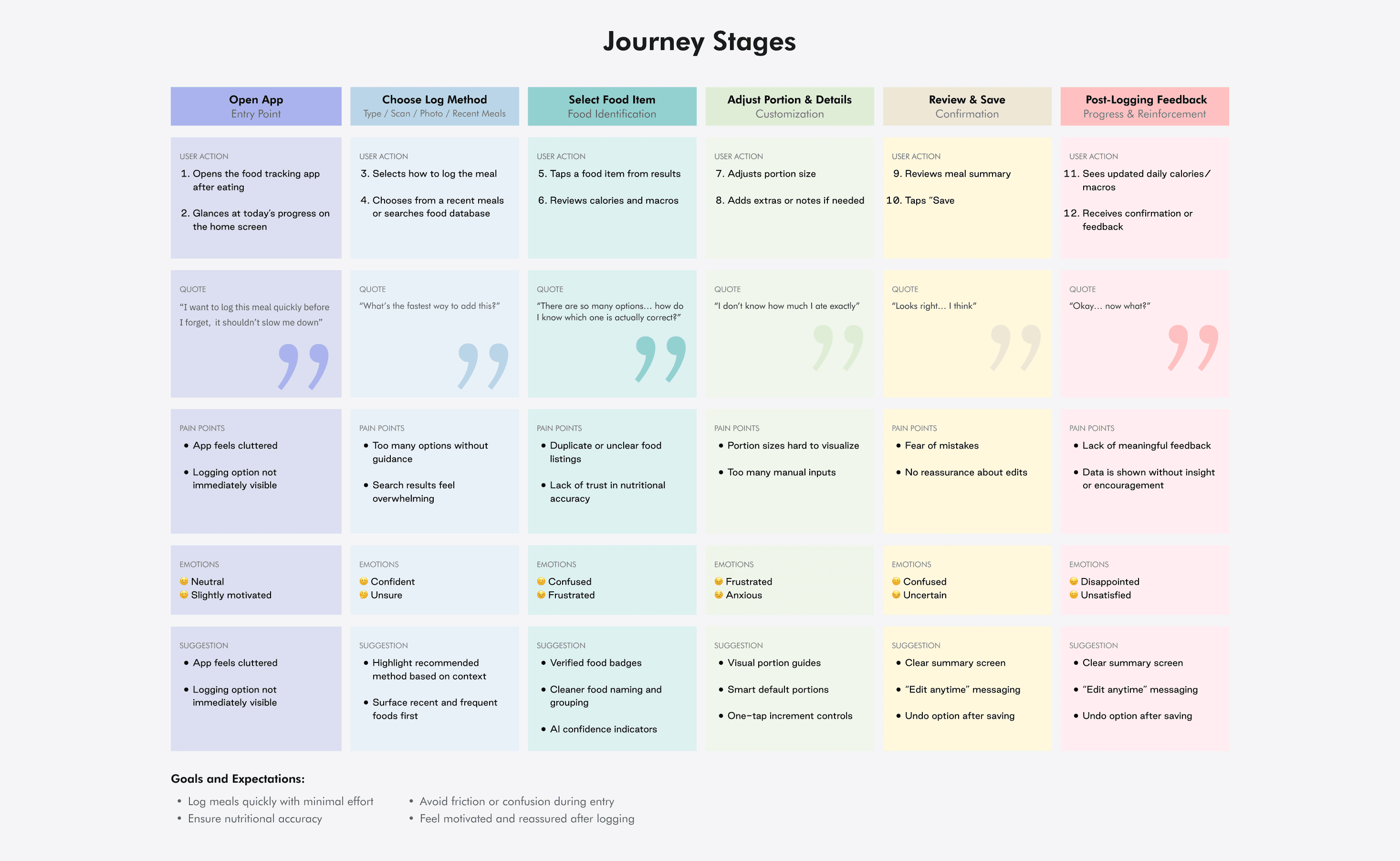
journey map
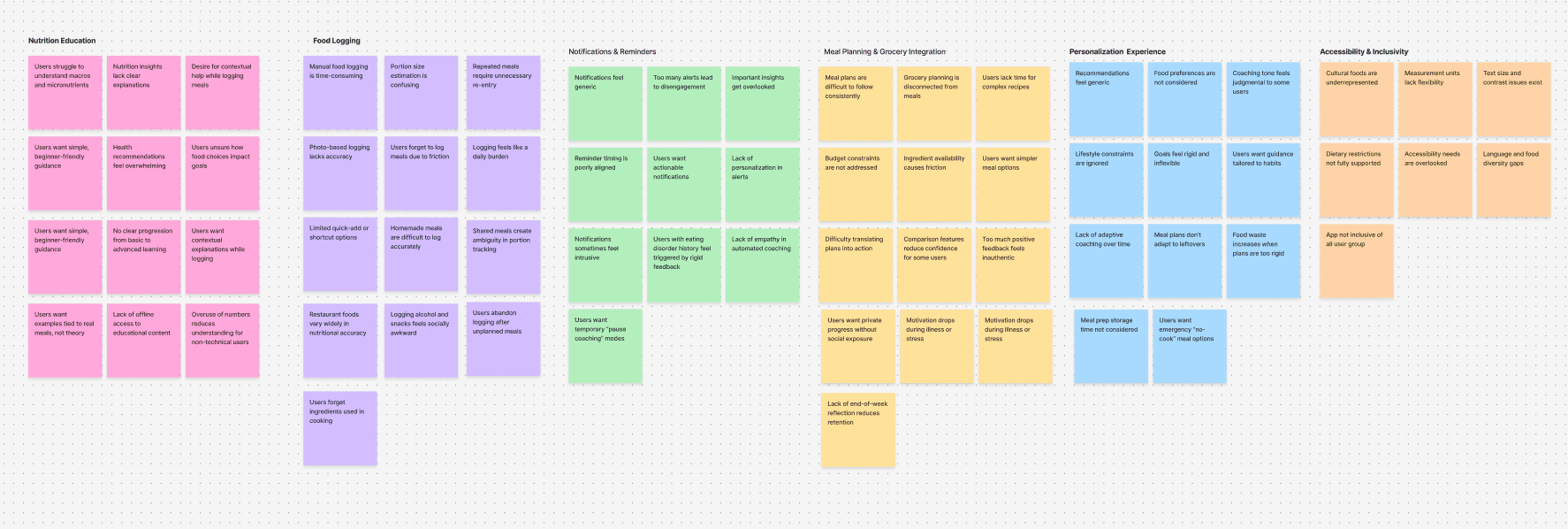
Affinity Diagram
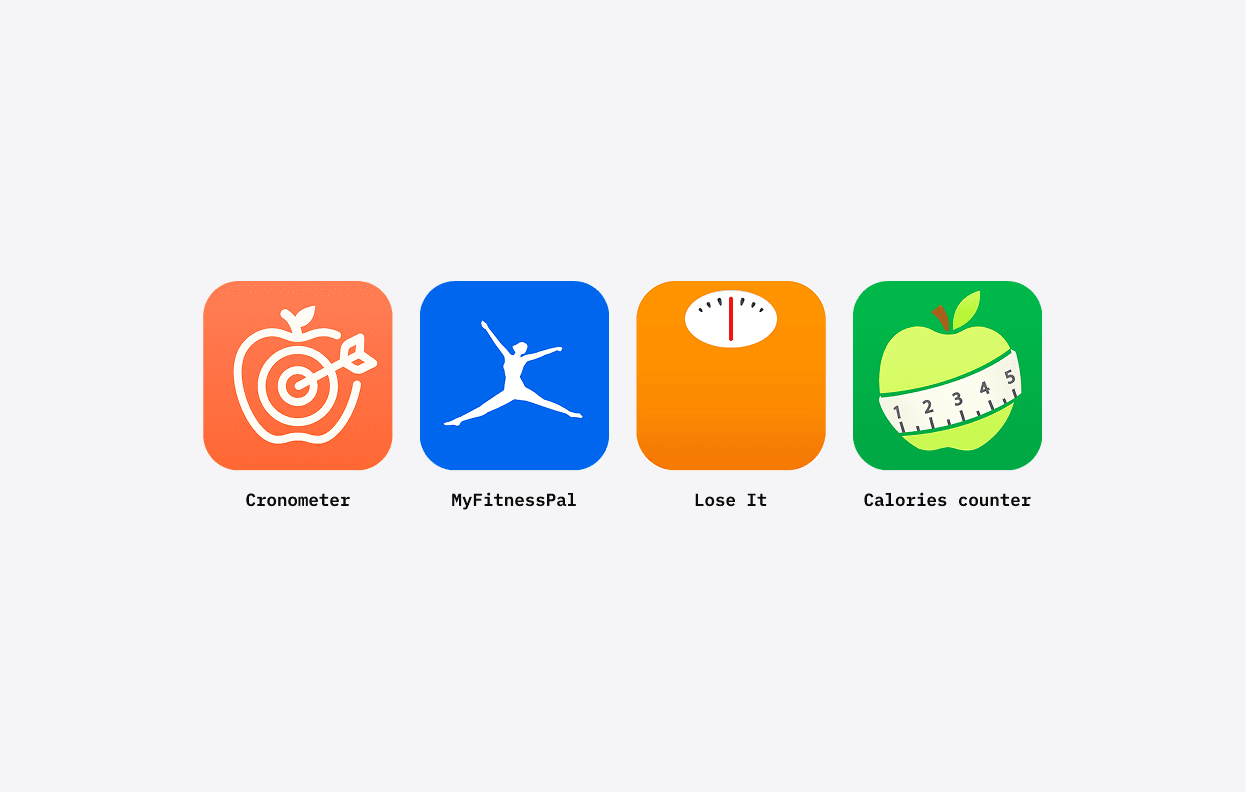
To understand the problem I’m solving with Nutrio, I walked through the user’s journey—pinpointing where they struggle or feel lost. Once I had the journey mapped, I used affinity mapping to organize key themes from what I learned. Then, I analyzed competitors to see how I could make Nutrio stand out.
Phase 2: Defining the Core Problems
Synthesize research into clear, human-centered problems and identify where Nutrio can uniquely add value.
Manual food entry takes up to two minutes per meal, causing fatigue and early user drop-off.
High Logging Friction
Over 60% of users feel overwhelmed by nutrient data with little actionable insight.
Data Without Meaning
Most apps ask 10–20 onboarding questions upfront, creating friction before users see any value.
Lengthy Onboarding Process
many app use the same interfaces and metrics for all users, regardless of goals or experience level.
Generic Goal Setting
All Apps respond after food is logged instead of guiding decisions before meals, when behavior change is most effective.
Lack of Proactivity
Charts and streaks dominate the UX, while meaningful behavior change support is largely absent.
Weak Behavior ReinforcemenT
With those key problems identified, I distilled them into one core issue. The central problem I needed to solve was
Problem Statement
Existing apps fail to foster lasting behavior change due to high logging friction, impersonal data, lengthy onboarding, generic goals, and lack of proactive support.
brief line about this Research
Phase 3: Framing the Opportunity
With the core problem defined, I saw an opportunity to simplify and personalize the experience.
1
Dynamic Feedback Loop
By integrating motion design, users receive engaging, interactive feedback on their actions.
2
Predictive Suggestions
By integrating motion design, users receive engaging, interactive feedback on their actions.
3
Real-Time Feedback
As users log choices, they receive instant, tailored responses to reinforce healthy decisions.
4
Personalized Daily Tips
Based on previous behavior, users receive tailored daily suggestions, keeping the experience relevant.
5
Streamlined Onboarding
A shorter, smarter onboarding flow reduces dropouts and gets users engaged from the start
6
Motivational Nudge
Small, encouraging prompts tied to user goals help sustain engagement daily.
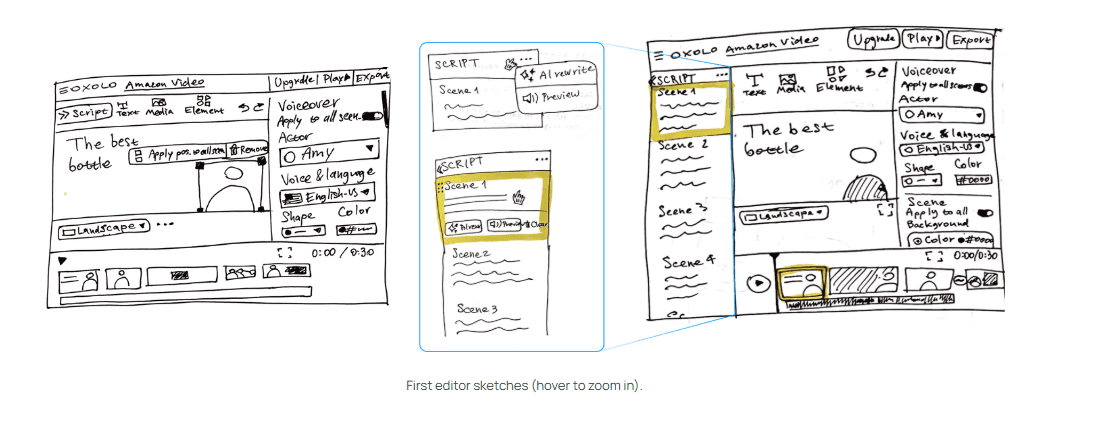
Used lo-fi concepts to test assumptions around effort reduction, comprehension, and emotional response.
Visual Design
Final Design decisions tied to research
The core purpose of Nutrio was to shift food tracking from data-heavy dashboards to actionable, real-time guidance—helping users make better decisions without overwhelming them with numbers
⚡ AI-Driven, Actionable Nutrition Guidance
Instead of presenting raw nutritional data, Nutrio introduces an AI food coach that provides real-time guidance. By proactively adapting to users’ eating habits, Nutrio goes beyond static statistics and clearly guides users on what to do nex
How Others do
Previously, users logged their meals without receiving immediate feedback. There was no real-time response to help them understand their food choices or feel supported, making the experience more passiv
How I do
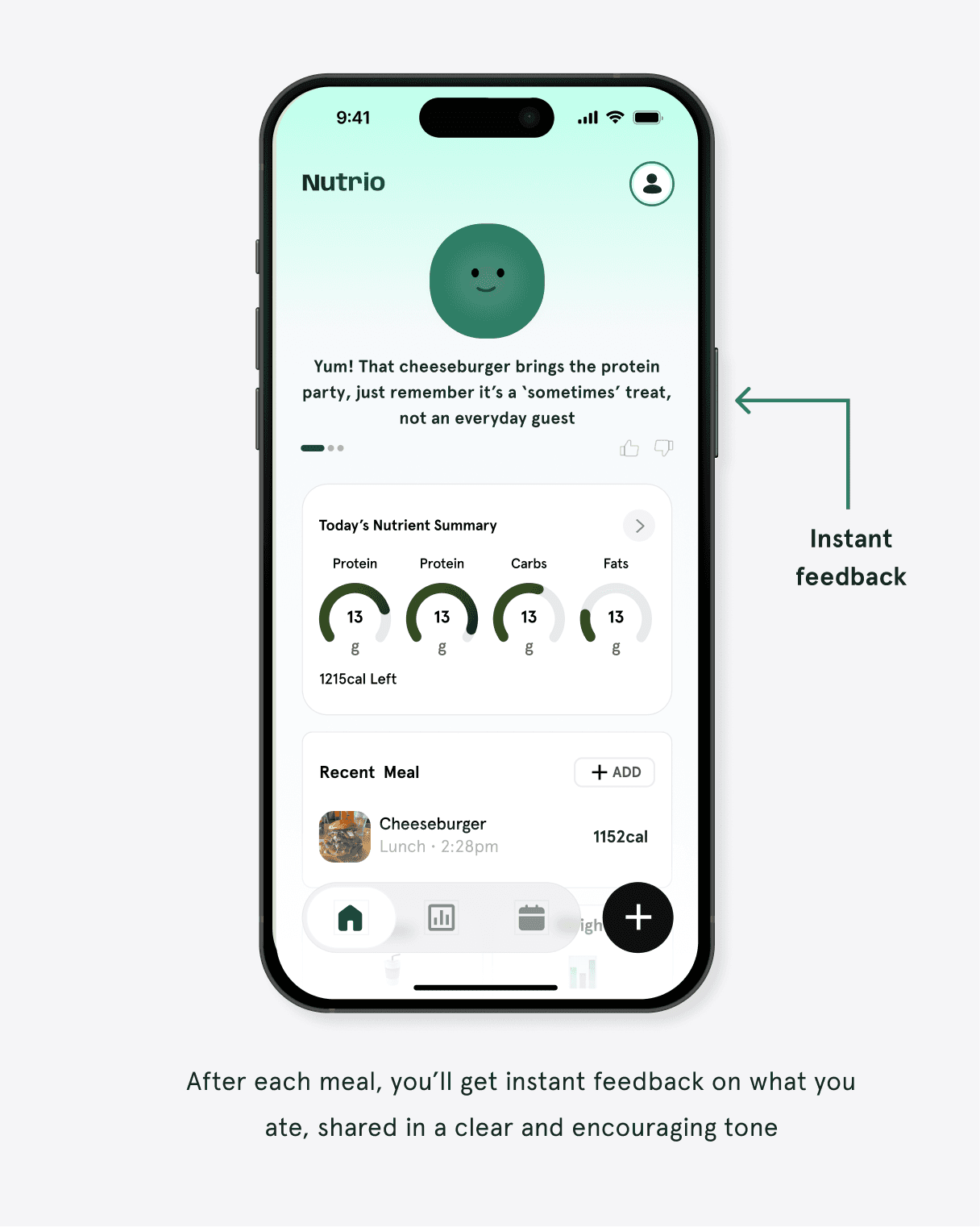
Users receive instant feedback after logging what they have eaten. The feedback is delivered in a supportive tone, helping users feel encouraged, informed, and more engaged with their choices.
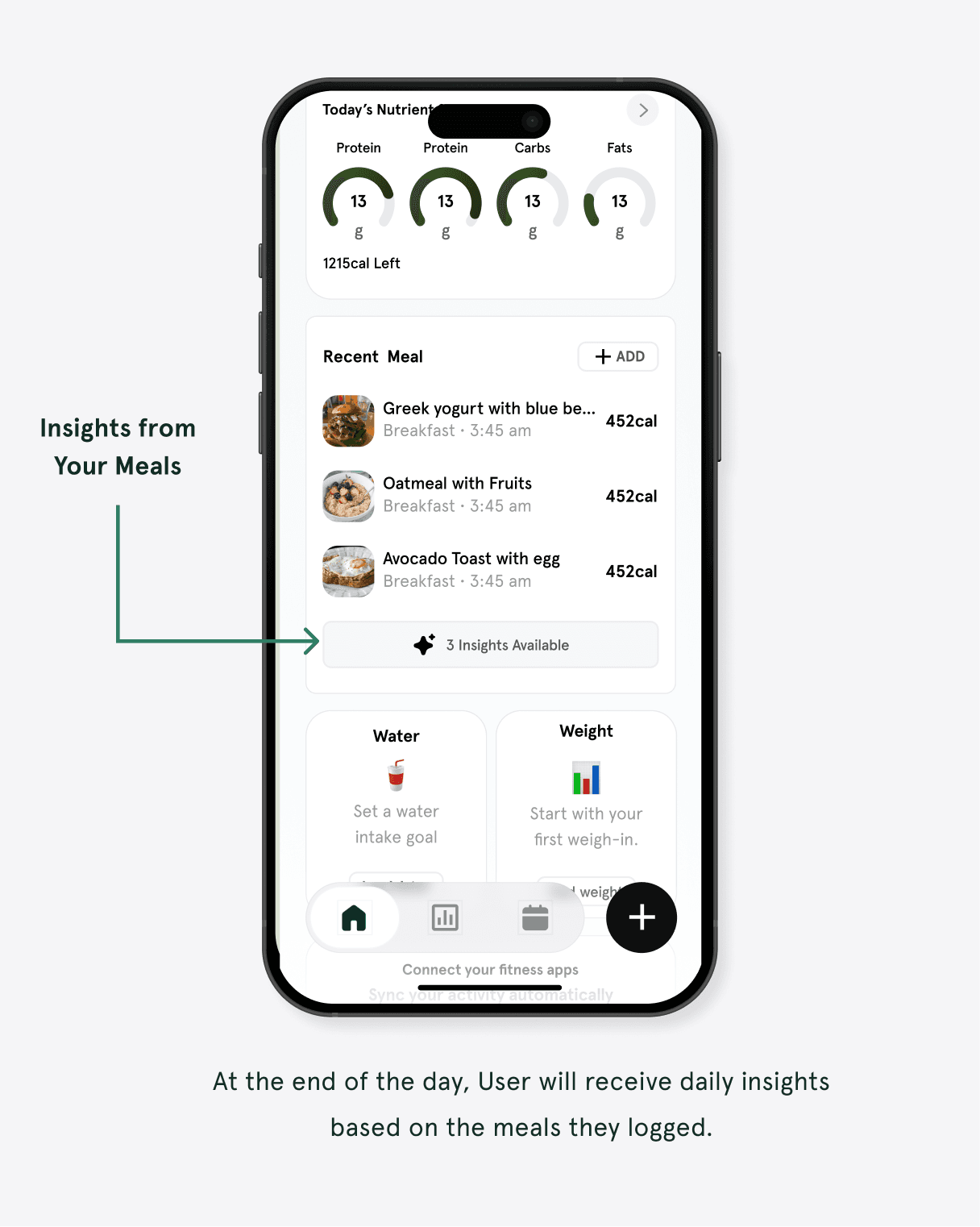
Users will also receive personalized daily and weekly insights that highlight eating patterns, suggest improvements, and support healthier dietary choices over time.
Reducing Onboarding Friction Through Flexible
Personalization
During the research phase, it became clear that many existing food tracking apps rely on long and monotonous onboarding flows. These experiences often demand too much effort from users at an early stage, leading to frustration and a higher likelihood of users dropping off before fully engaging with the app
Before
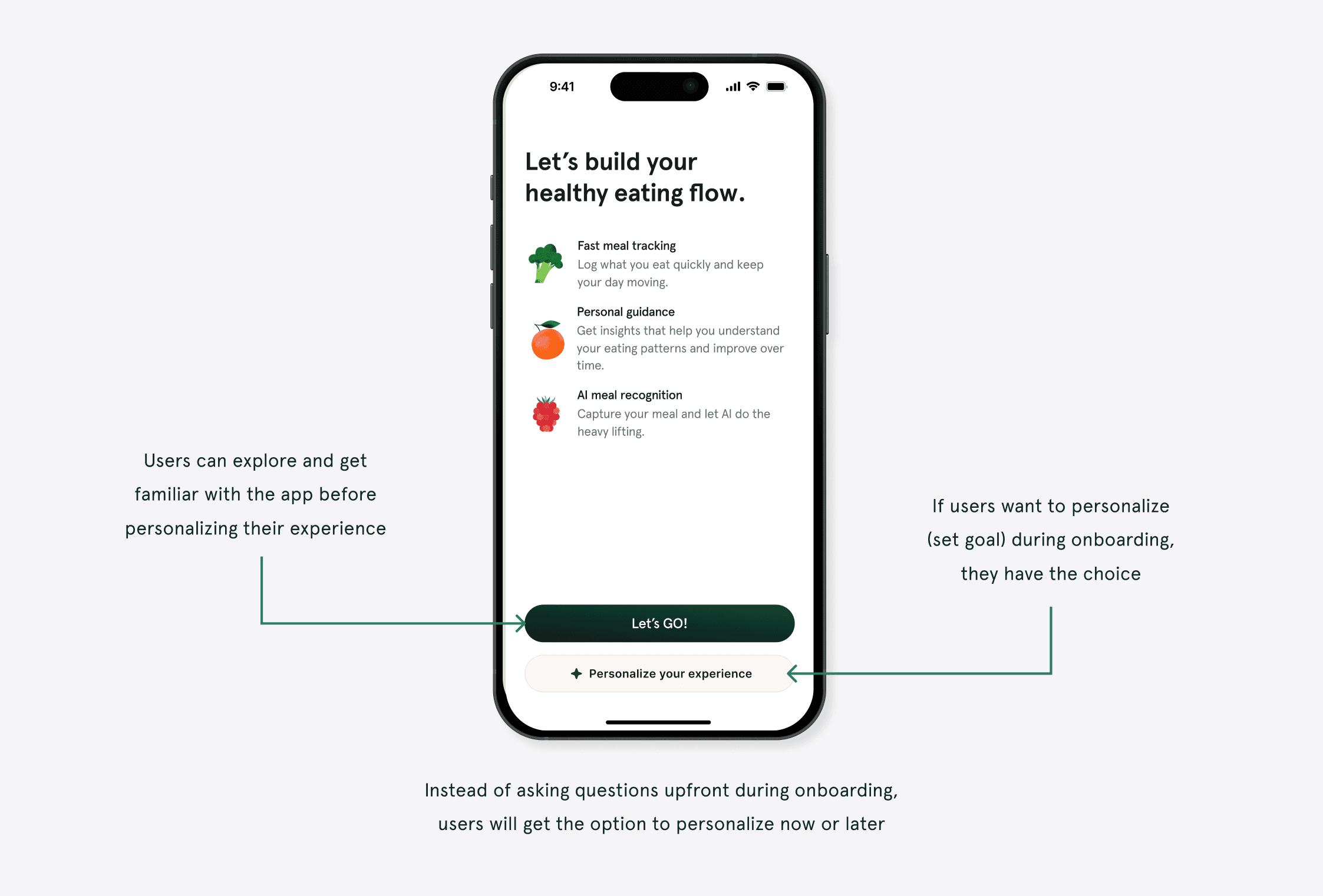
Users had to answer multiple questions upfront, making onboarding long and causing high drop-off, with 60% of users dissatisfied.
After
Users can choose to personalize their experience now or later, reducing onboarding length and improving early retention
Impact
The redesign improved trust, reduced confusion, and drove higher adoption of core financial features.
68%
Increase in Vault deposits
+42% increase in USDT Vault visits
–19%
Fewer complaints related to unexpected losses
-28%
Drop in UPI deposit related support tickets
Back to Home
Open to Work
Contact