An AI Food Coach that turns food logs into clear, actionable decisions
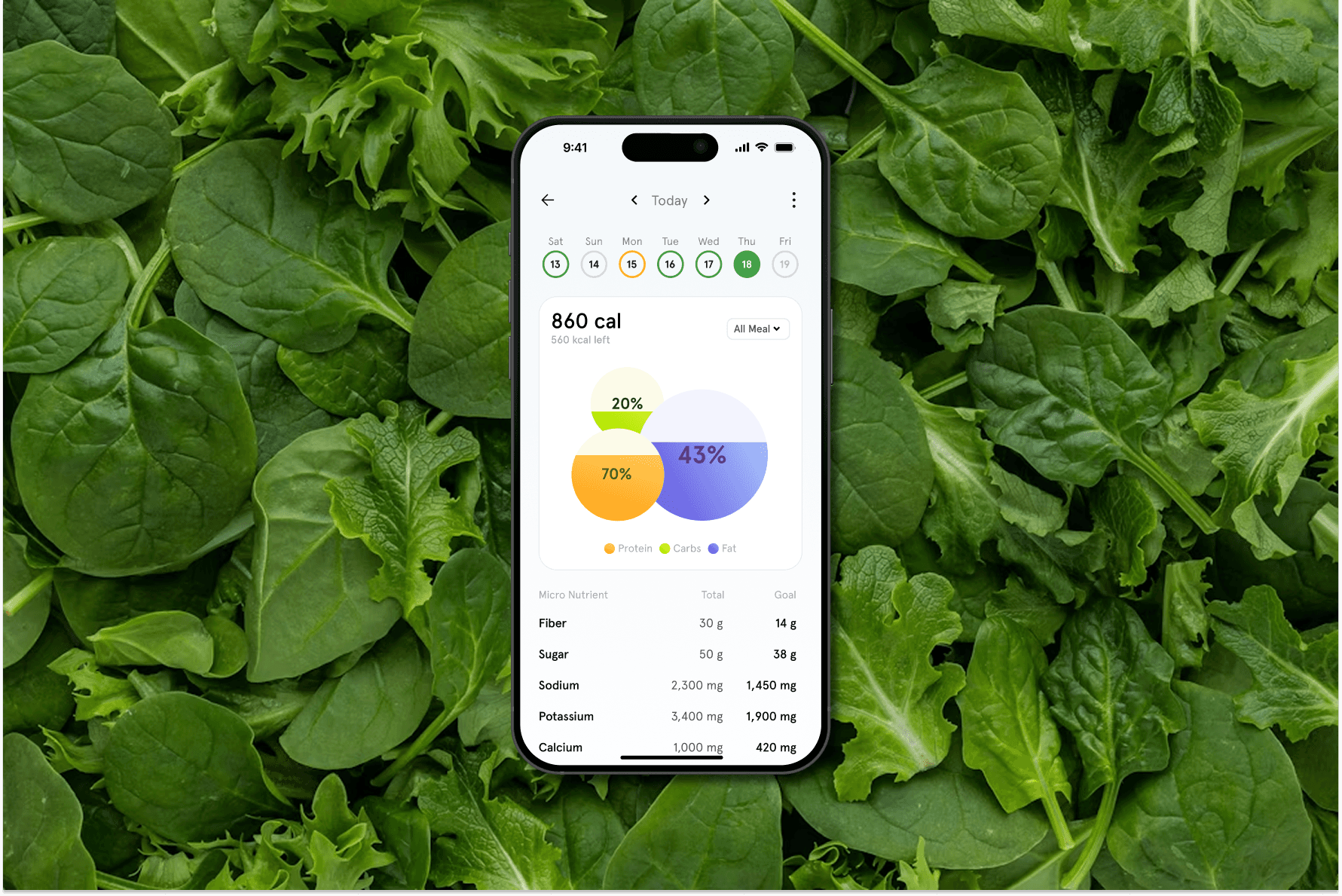
Context & Background
The Missing Piece: From Tracking to Personalized Guidance
Research
The research followed three phases, progressing from broad market analysis to deep user insights, and finally to clear problem framing and opportunity definition.
Phase 1: Understanding the Problem
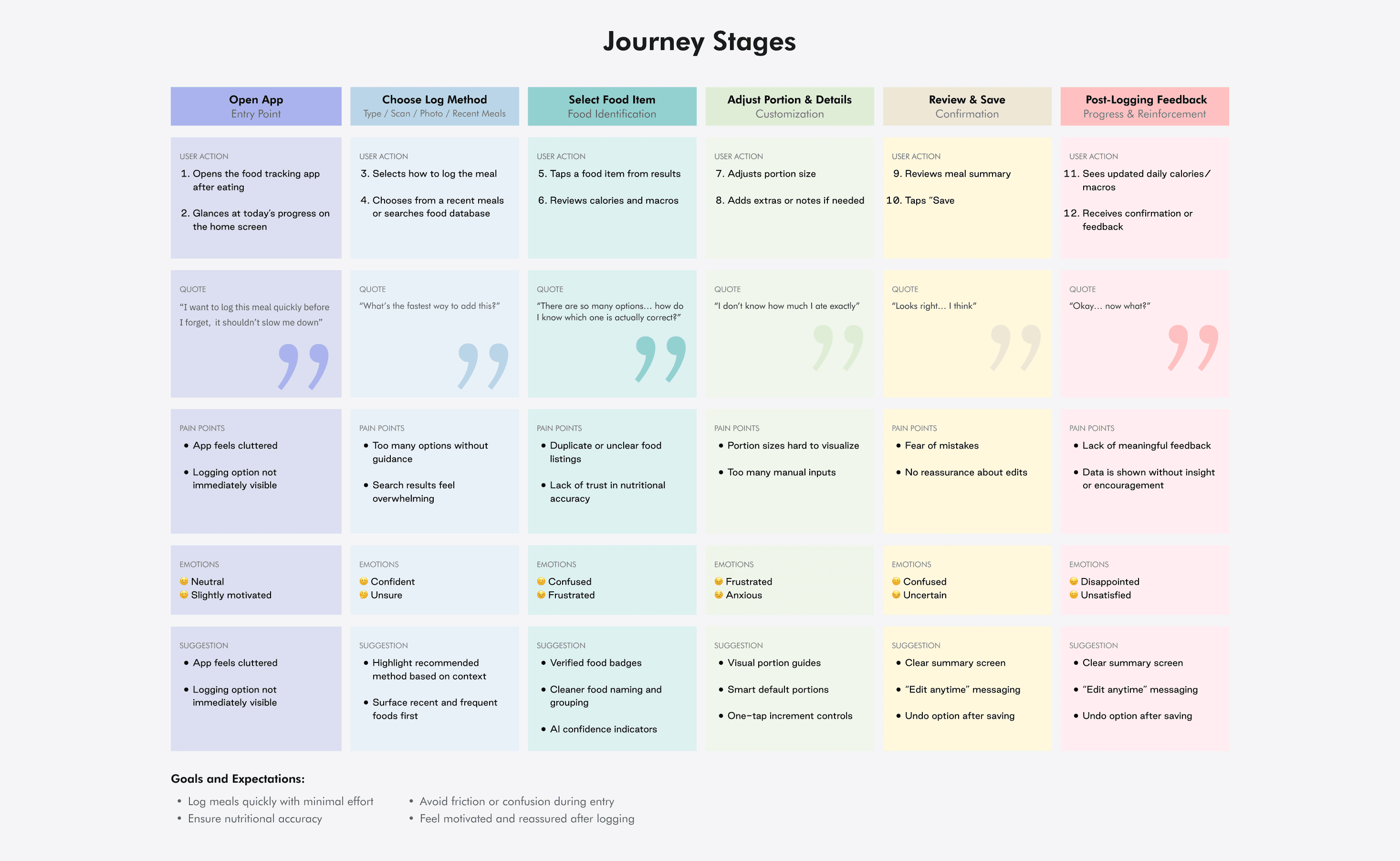
To understand the problem I’m solving with Nutrio, I walked through the user’s journey—pinpointing where they struggle or feel lost. Once I had the journey mapped, I used affinity mapping to organize key themes from what I learned. Then, I analyzed competitors to see how I could make Nutrio stand out.
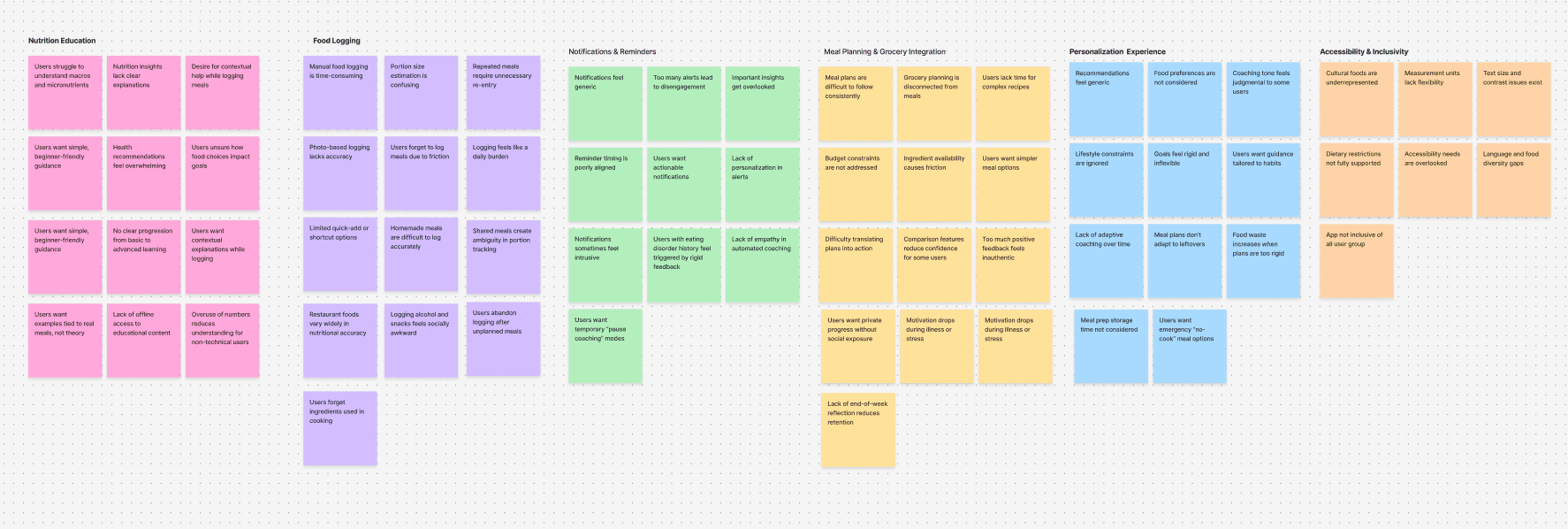
Affinity Diagram
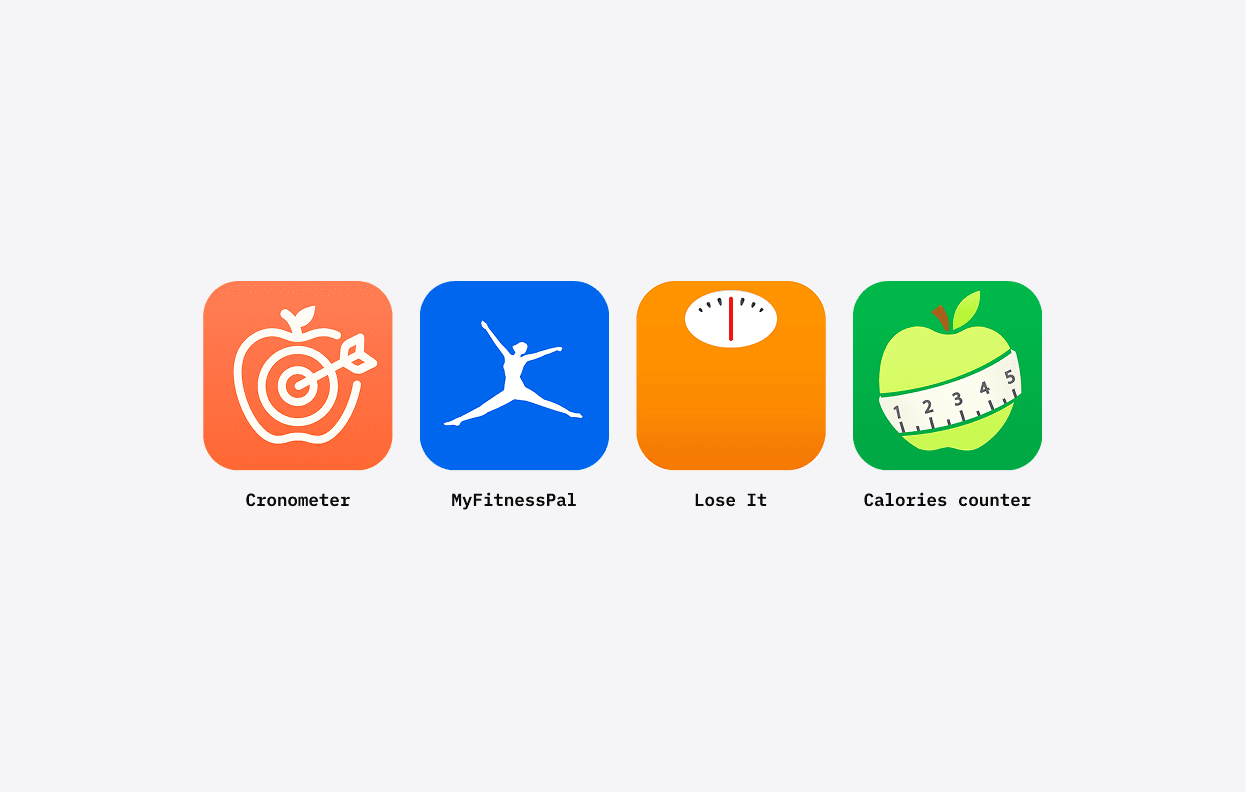
To understand the problem I’m solving with Nutrio, I walked through the user’s journey—pinpointing where they struggle or feel lost. Once I had the journey mapped, I used affinity mapping to organize key themes from what I learned. Then, I analyzed competitors to see how I could make Nutrio stand out.
Phase 2: Defining the Core Problems
Synthesize research into clear, human-centered problems and identify where Nutrio can uniquely add value.
With those key problems identified, I distilled them into one core issue. The central problem I needed to solve was
brief line about this Research
Phase 3: Framing the Opportunity
With the core problem defined, I saw an opportunity to simplify and personalize the experience.
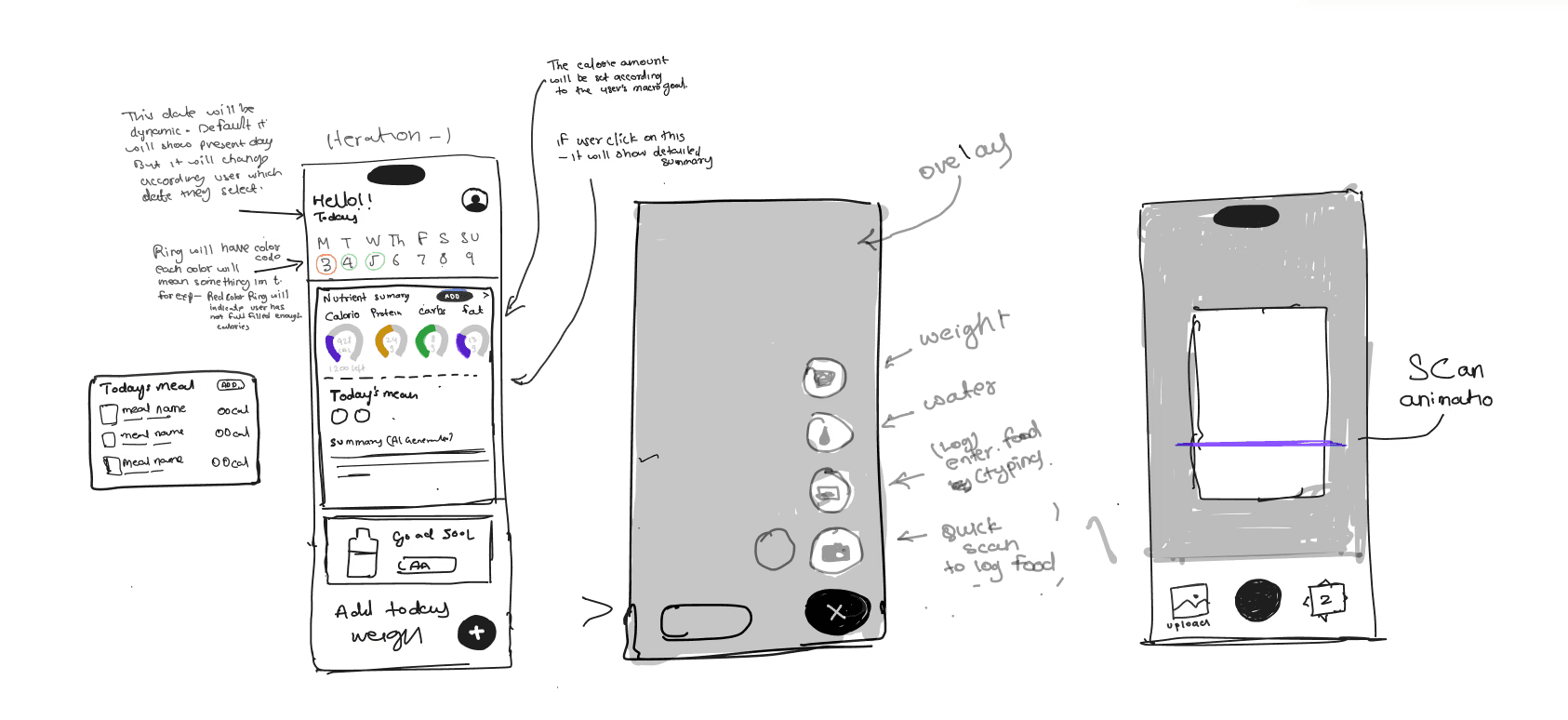
Used lo-fi concepts to test assumptions around effort reduction, comprehension, and emotional response.
Visual Design
Final Design decisions tied to research
The core purpose of Nutrio was to shift food tracking from data-heavy dashboards to actionable, real-time guidance—helping users make better decisions without overwhelming them with numbers
⚡ AI-Driven, Actionable Nutrition Guidance
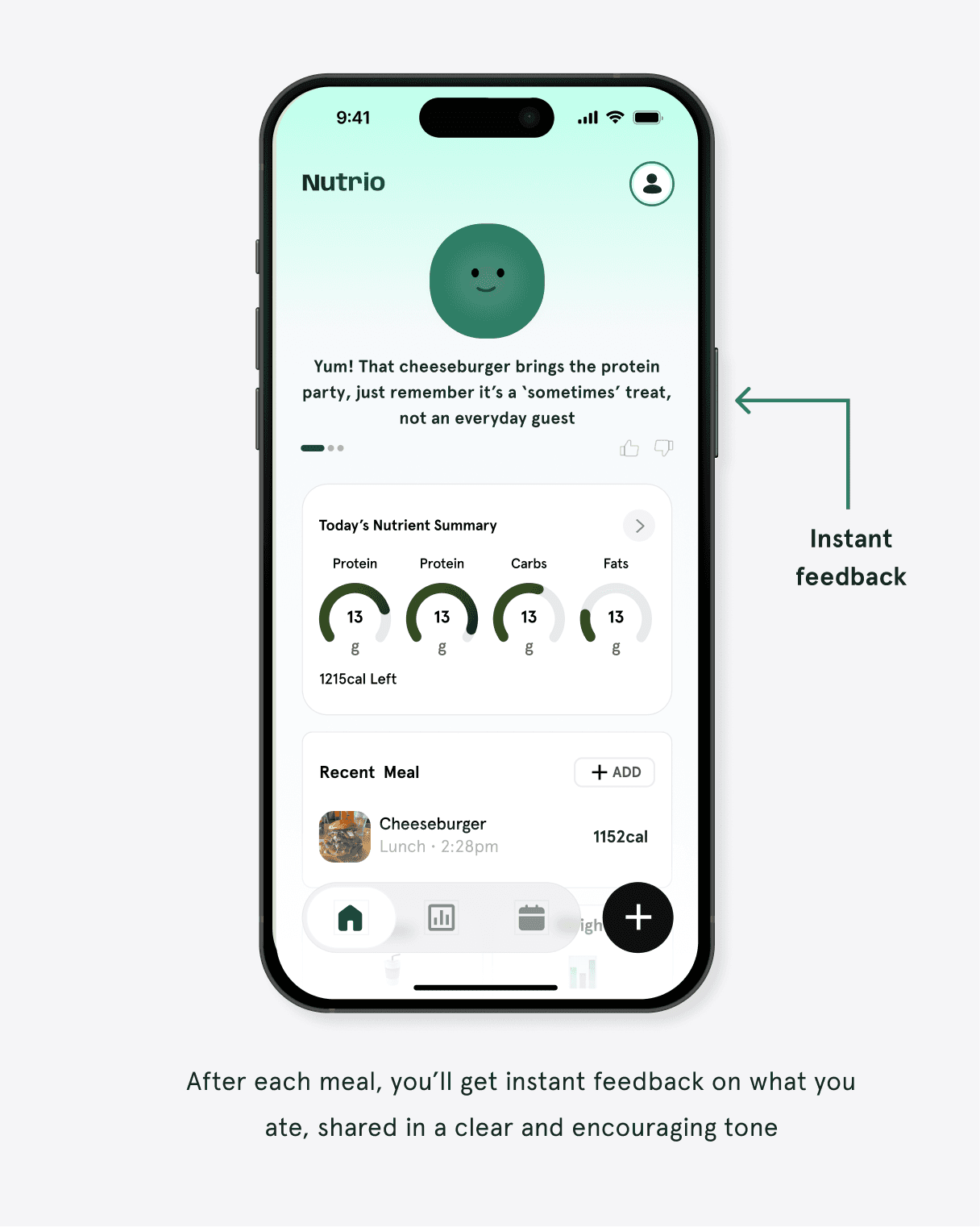
Instead of presenting raw nutritional data, Nutrio introduces an AI food coach that provides real-time guidance. By proactively adapting to users’ eating habits, Nutrio goes beyond static statistics and clearly guides users on what to do nex
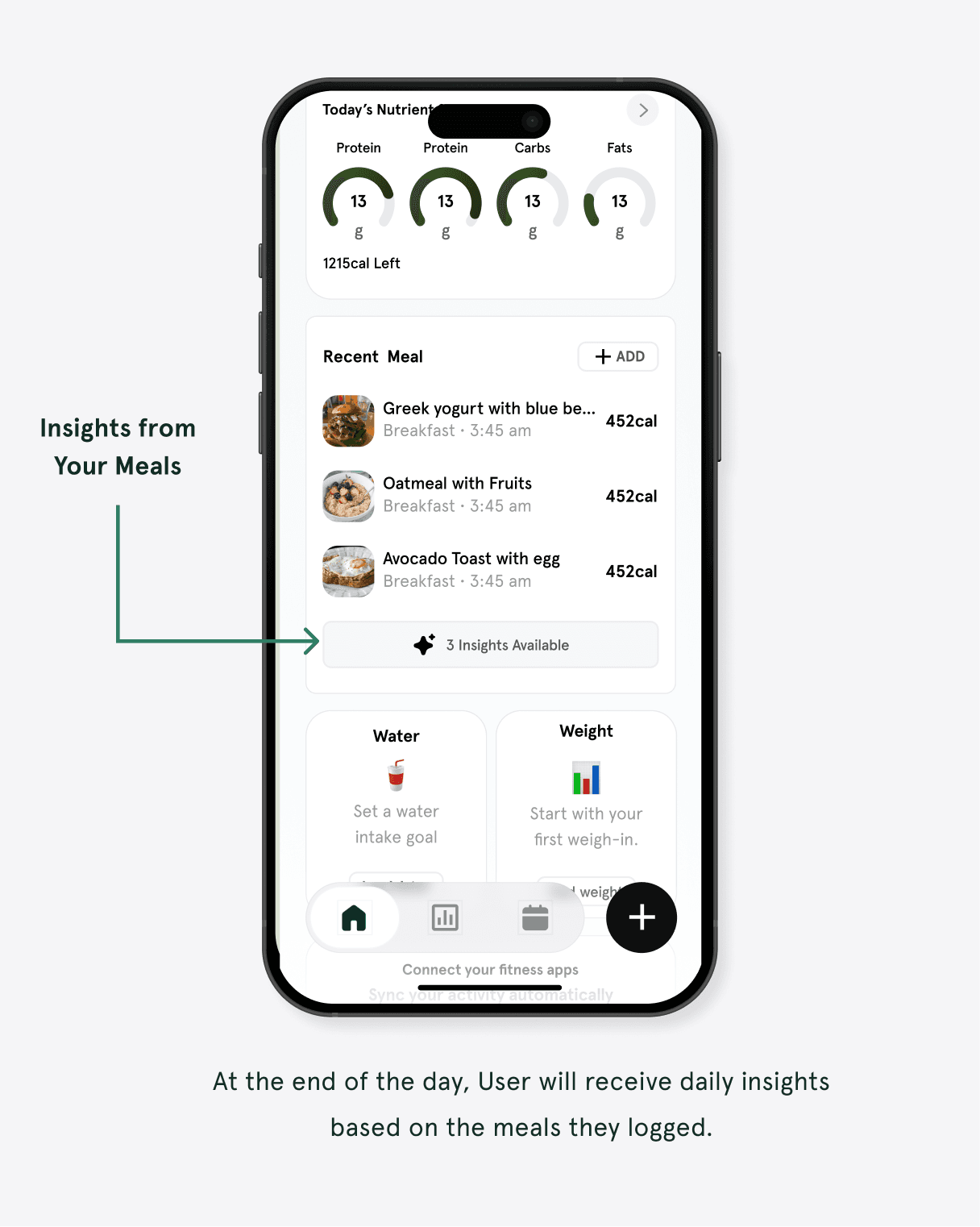
Users will also receive personalized daily and weekly insights that highlight eating patterns, suggest improvements, and support healthier dietary choices over time.
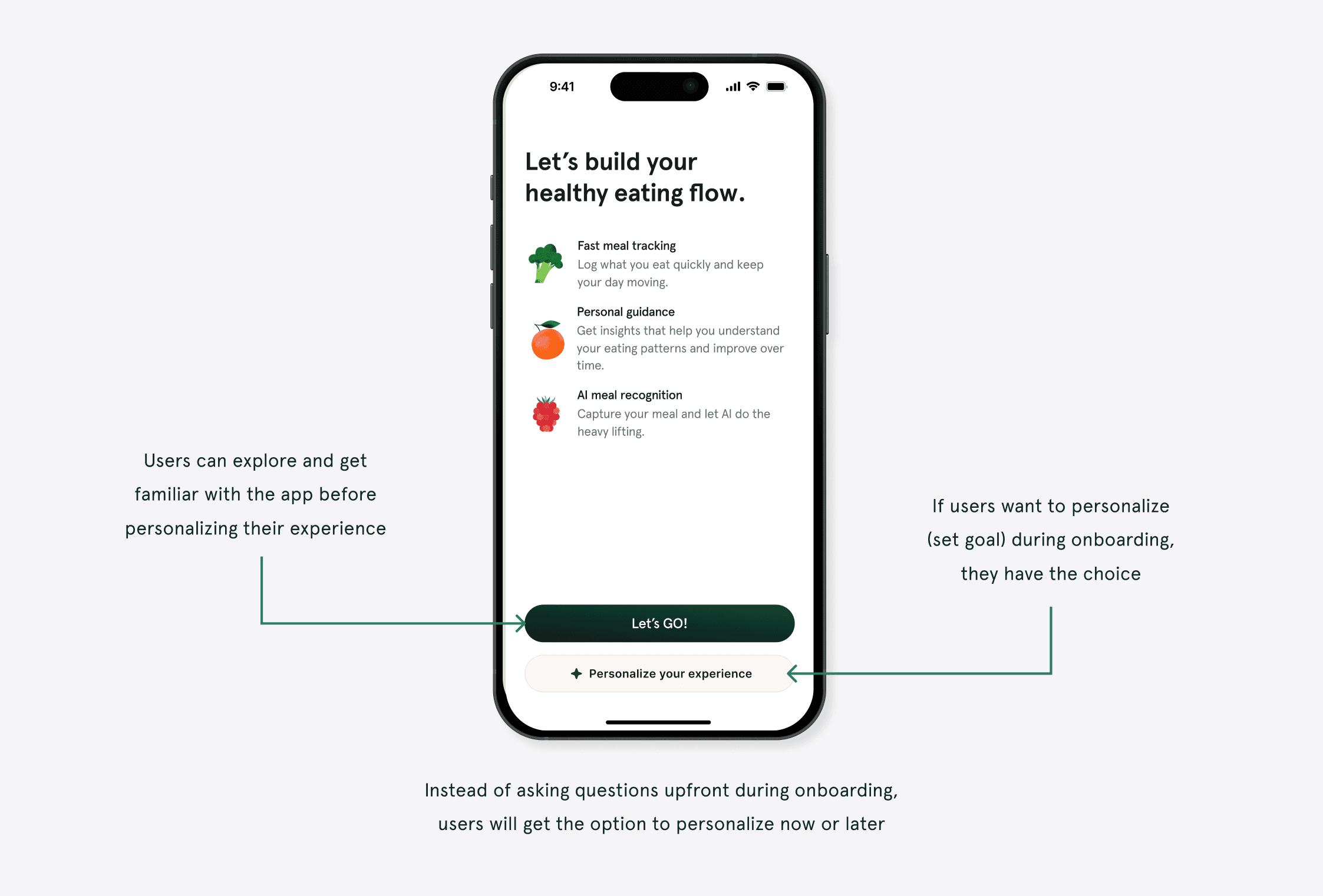
During the research phase, it became clear that many existing food tracking apps rely on long and monotonous onboarding flows. These experiences often demand too much effort from users at an early stage, leading to frustration and a higher likelihood of users dropping off before fully engaging with the app
Impact
The redesign improved trust, reduced confusion, and drove higher adoption of core financial features.