Role
UX Designer
Timeline
4 Months
Impact
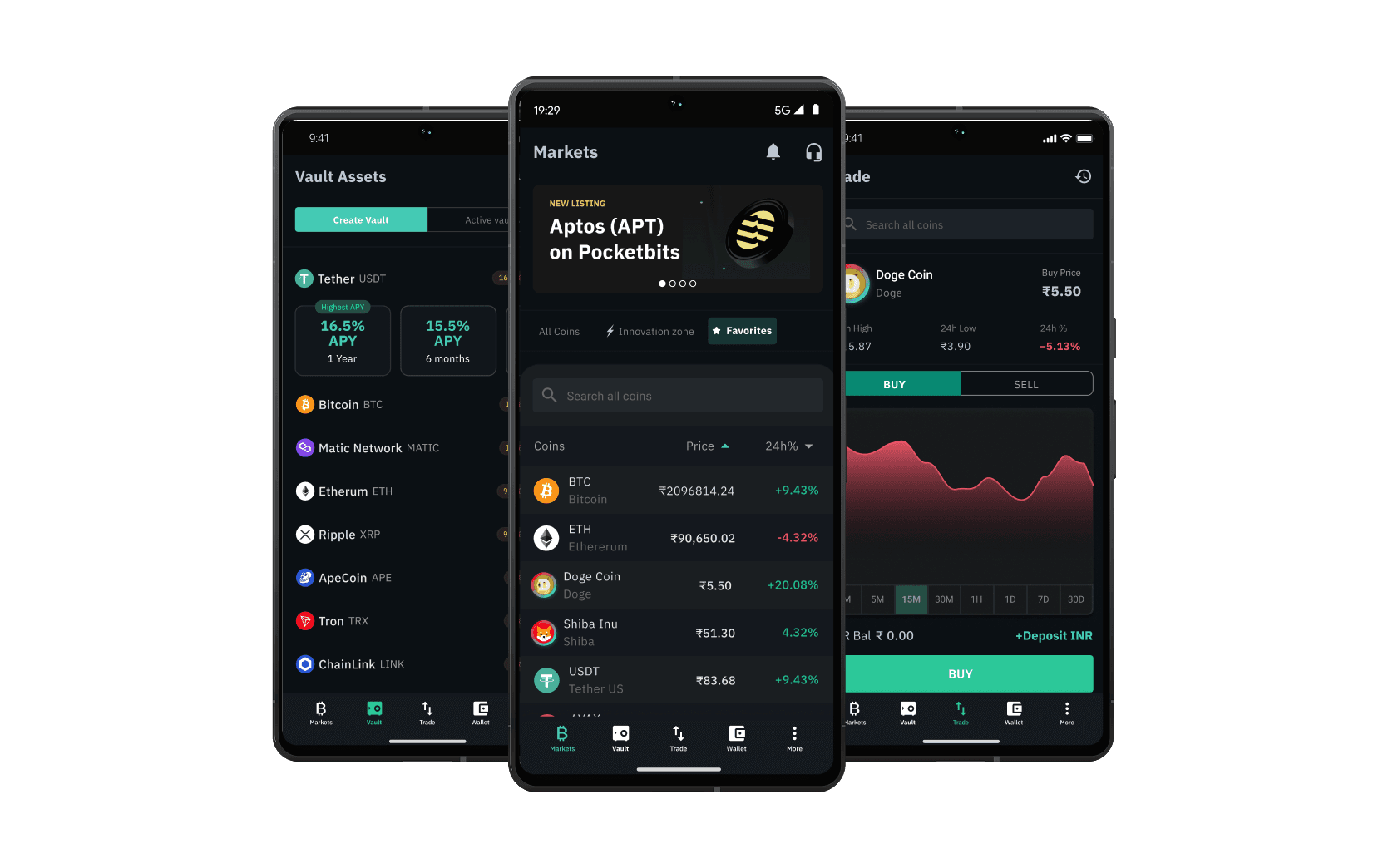
The impact speak first. After the redesign, users felt at ease finding things faster, facing fewer issues, and trusting more. Here’s what that looked like
WhY redesign ?
So why did we need a fresh approach?
As crypto adoption grew in India, PocketBits, from around 2017, saw a wave of users. The app struggled with navigation, visuals, and backend issues, hurting the business.
So it became clear the app had to evolve and we improved the entire experience.
Research
Diving Into Research: Uncovering Our Crypto Users & Their Needs.
To understand the problem more deeply in the crypto space, the research was divided into three parts: evaluating the app, gathering user feedback, and analyzing other exchanges.
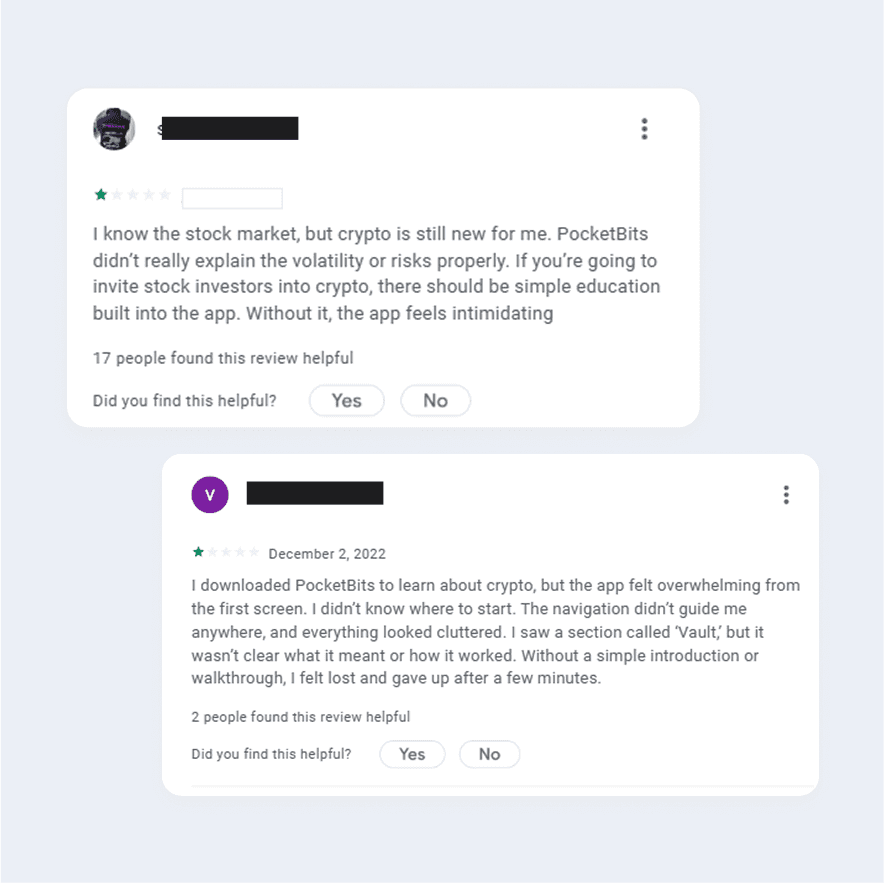
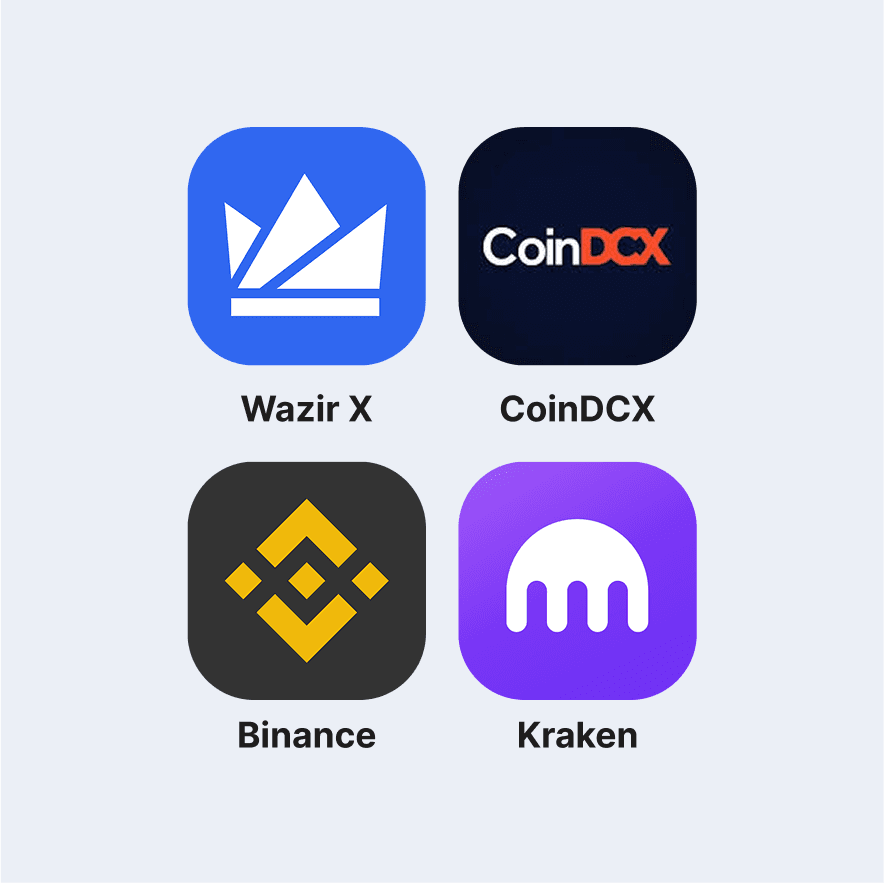
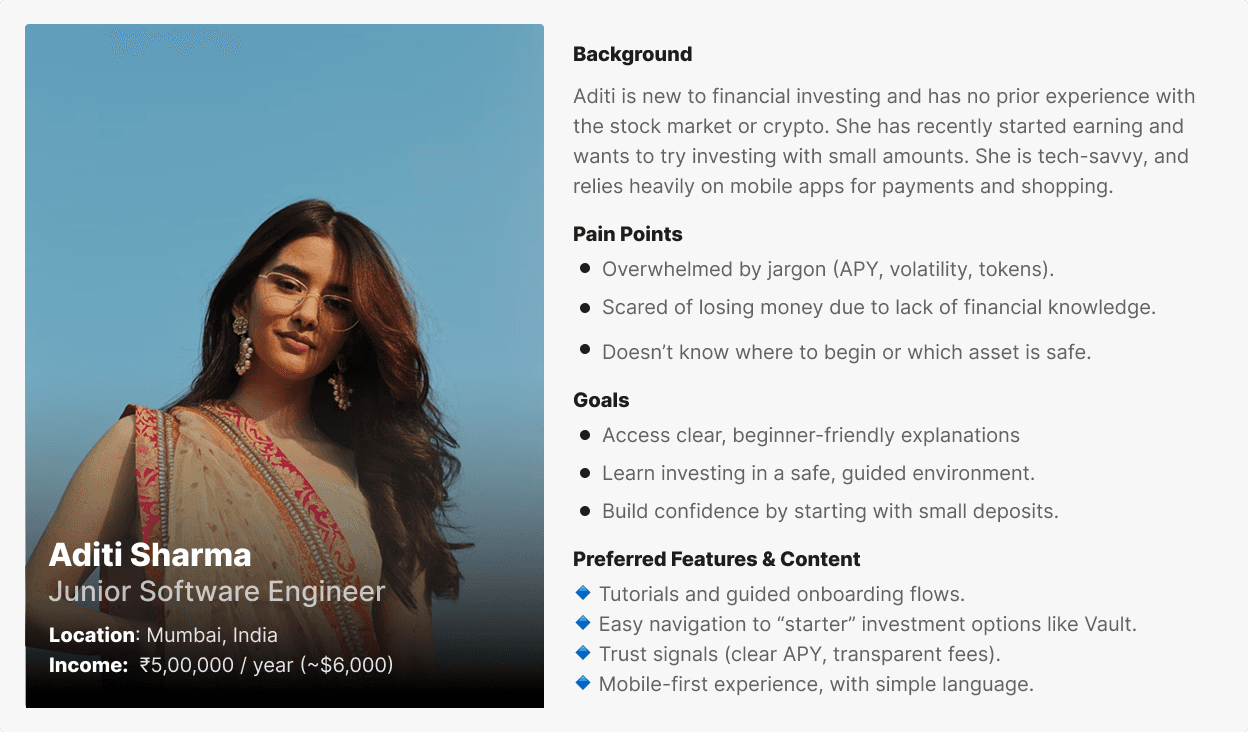
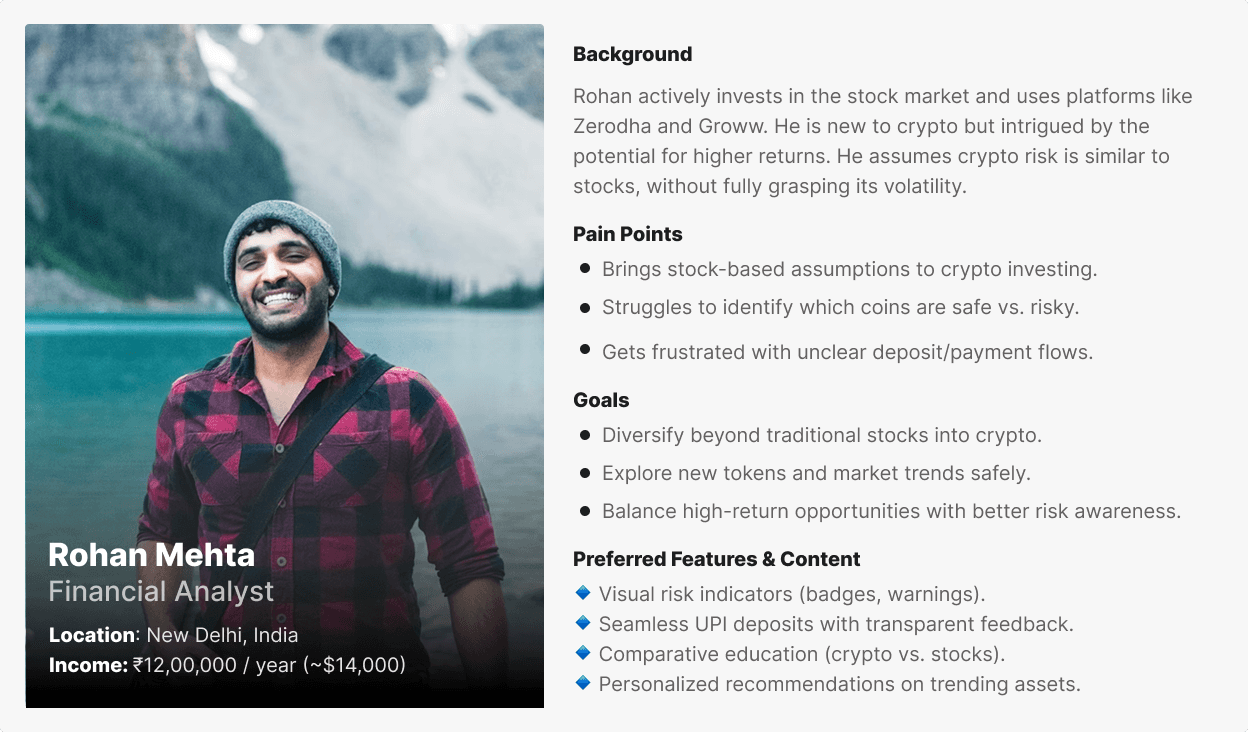
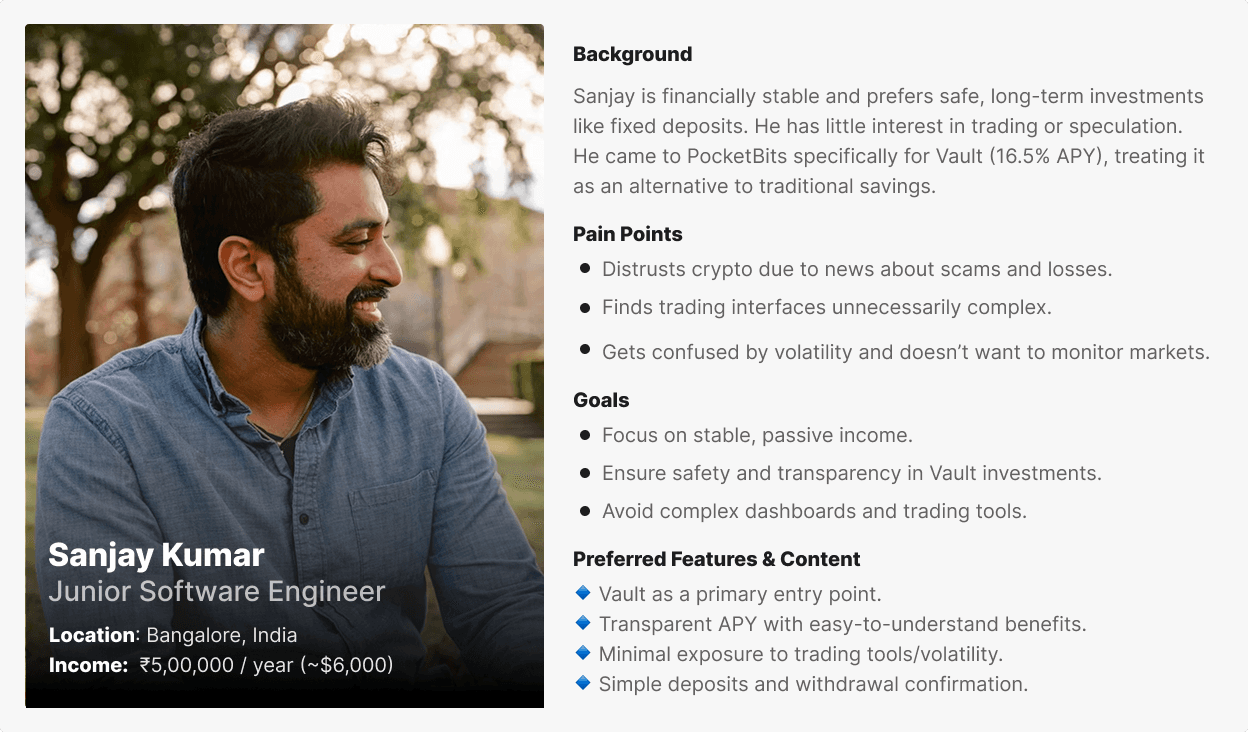
After gathering the data, we defined personas to reflect exactly who we were designing for, and what we found was this: we had new users and a younger audience, tech-savvy audience entering the space often recently employed and eager to invest.
Meet Our Crypto Persona
Let’s introduce you to the key persona who represents the new wave of crypto users we discovered.
Key Usability Challenges
Prioritizing Our Key Usability Hurdles
While the PocketBits app had a range of usability concerns, our research pinpointed three core issues that stood out.
🗺️
Navigation Issue
Despite offering high returns on investments, users struggled to find key features, making navigation frustrating.
Сhallenge #1
📉
Loosing Funds
Сhallenge #2
⏳
Slow Transaction
The deposit and withdrawal process was slow, frustrating users who wanted quick access
Сhallenge #3
Problem Statement
Crypto users face unclear interfaces, volatile assets, and slow transactions, blocking smooth trading.
Сhallenge #1
Navigation Issue
We made sure users could actually find the features that mattered, like the vault.
Despite offering a 16.5% APY on assets (the highest at that time in India) the number of clicks to the Vault Page was much lower compared to the daily active users. This indicated that many users either couldn’t find the feature easily or were unaware of its benefits.
How I fixed it
I saw that the Vault, a key feature, wasn’t easy to find. I added it to the bottom navigation, boosting visits. I also redesigned the page with a section for features like new assets and added subtle cues to encourage exploring high-yield offers.
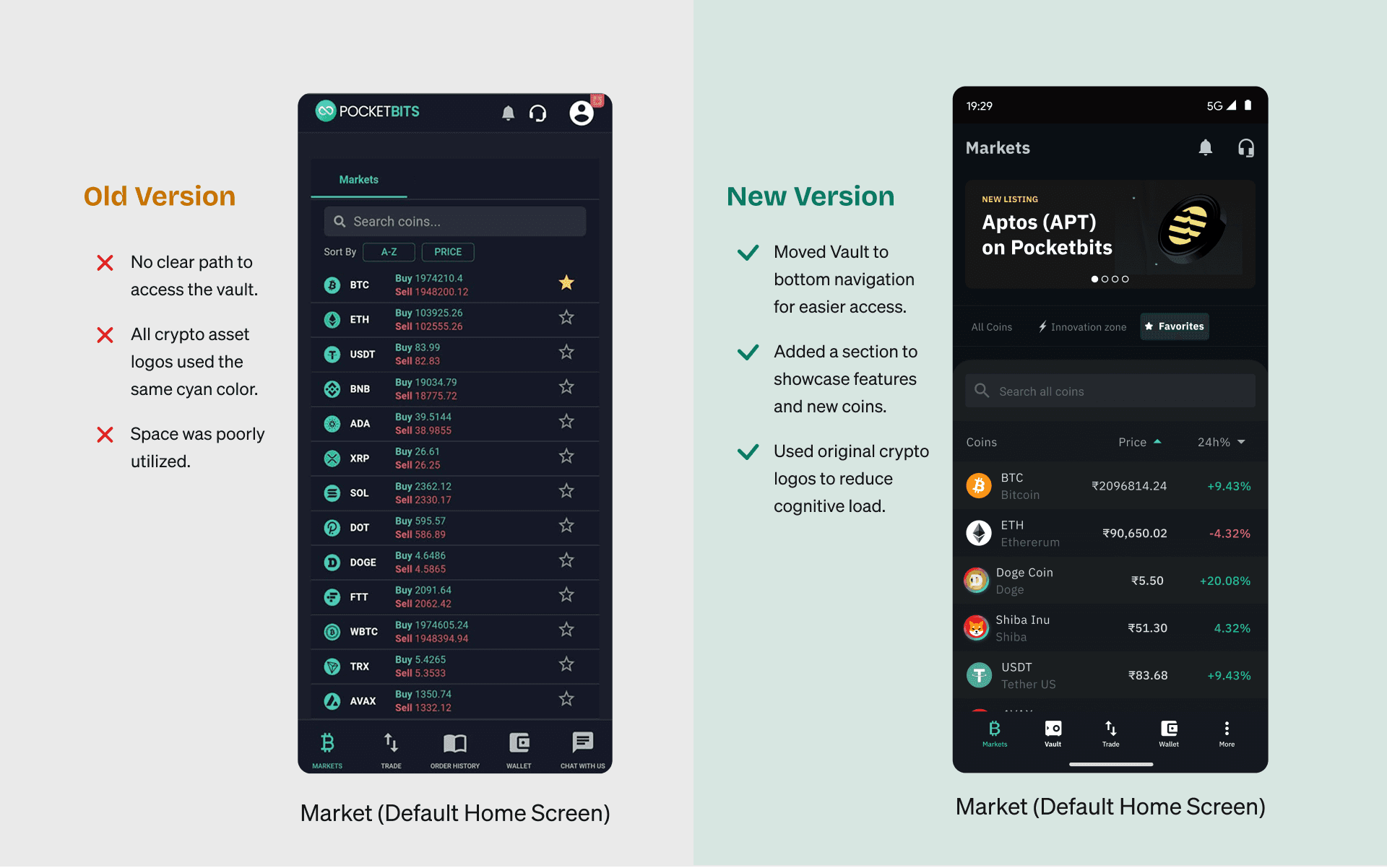
Old Version
In the older version of PocketBits, the key Vault feature had no clear path, the home screen was cluttered with identical cyan logos, which confused users, and the layout lacked proper organization.
New Version
In the new version, I added the Vault to the bottom navigation for easy access. I included a section to highlight listed coins and APY, and I replaced the logos for clearer navigation.
Iterating Toward the Right Solution.
I came up with two design iterations to address this issue and validated them through user testing before final implementation
Iteration 01
In iteration one, when users clicked the Vault icon, they were taken to a dedicated page where coins were displayed in a grid. Clicking a coin opened a detailed view showing what that coin offered
Iteration 02
In iteration two, clicking the Vault led to a list layout. Each coin had a dropdown, and expanding it showed the coin’s offering
After usability testing with team members and family (since we were a startup with a limited budget), we found that in iteration one, the number of clicks was higher compared to iteration two. Additionally, iteration one was not scalable in the long term. Based on these insights, stakeholders decided to move forward with iteration two.
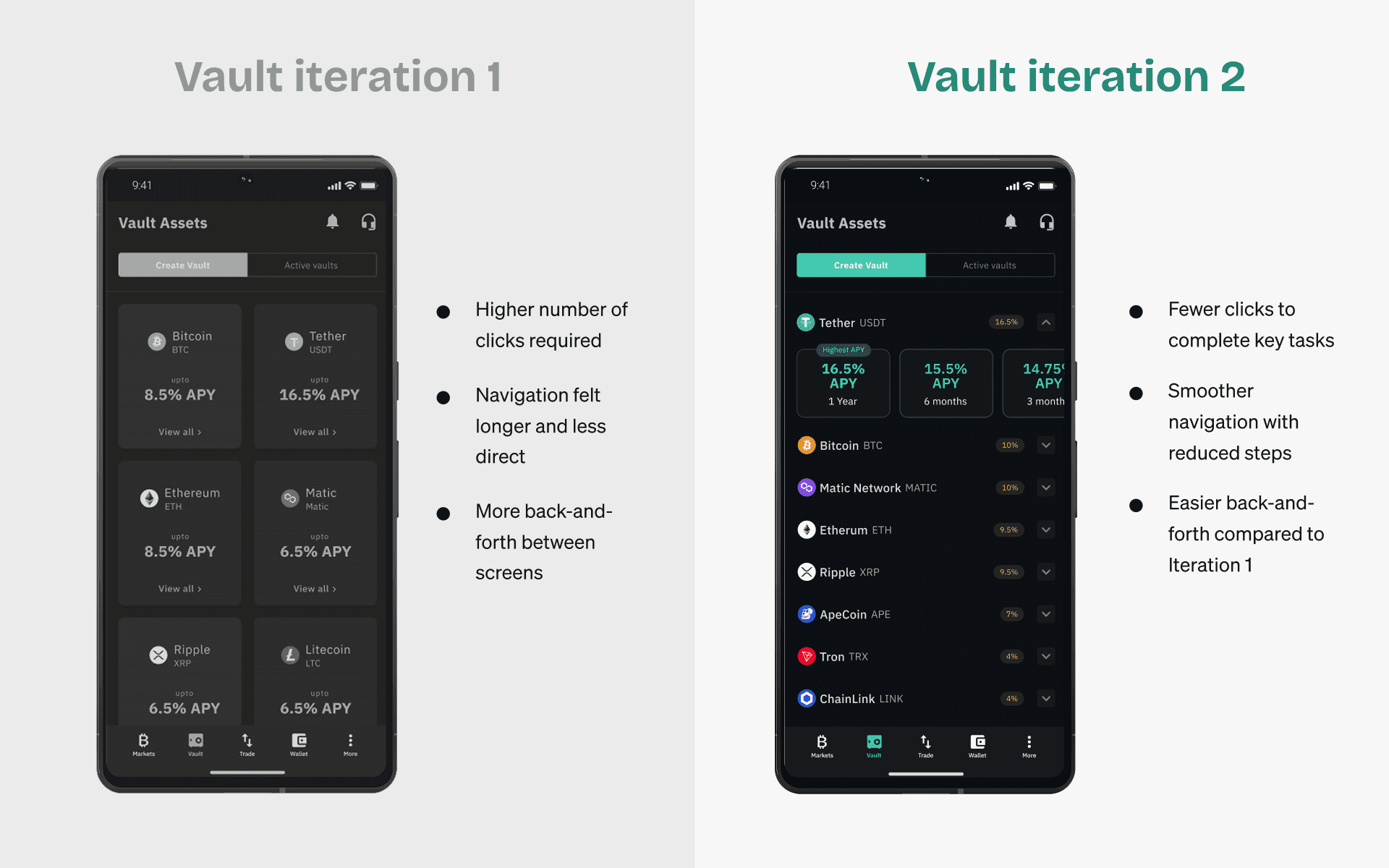
In conclusion, by refining the user journey through careful iterations and user testing, I made the Vault feature easier to find, improved clarity, and ensured that users could confidently explore and benefit from key offerings.
Сhallenge #2
Loosing Funds
Users Losing Money on Volatile Assets
Many users were investing in highly volatile cryptocurrencies without fully understanding the risks. This often led to sudden losses during sharp market swings. Because the app did not communicate price fluctuations or provide timely alerts, users were caught off guard and felt frustrated or misled
To address this, we introduced the Innovation Zone Badge—a feature that notifies users before they trade newly listed or highly volatile assets, helping them make more informed decisions.
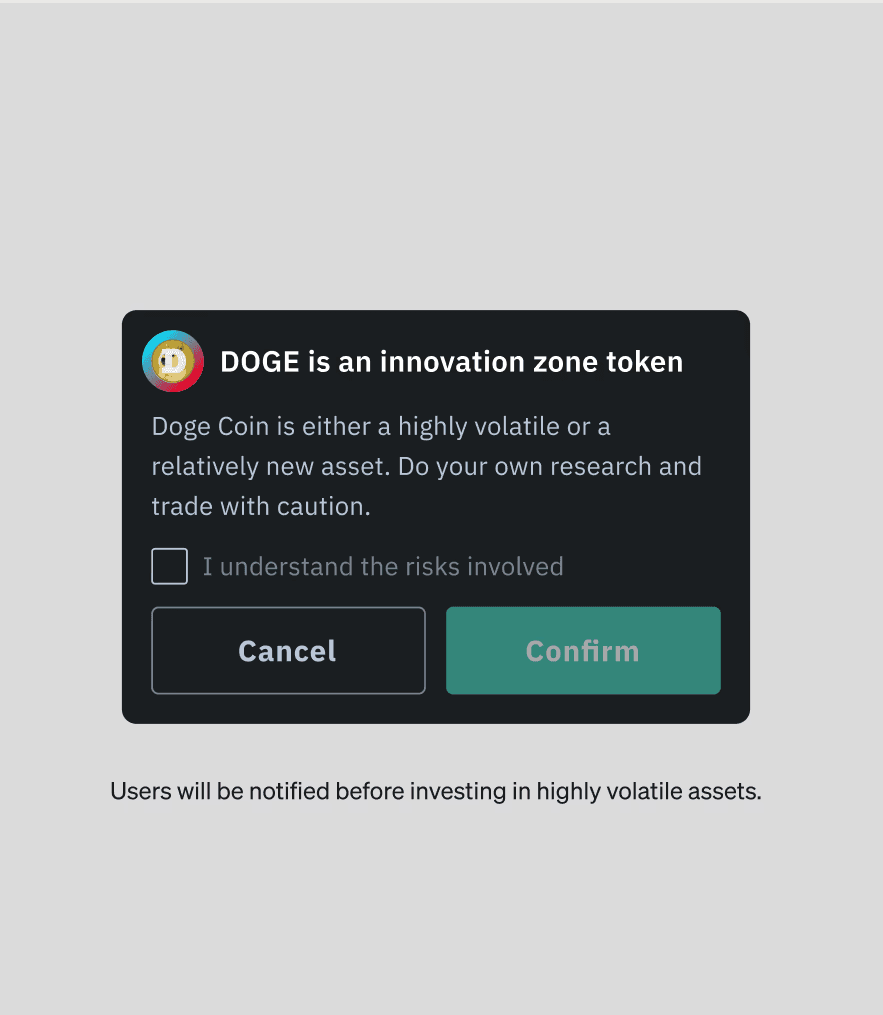
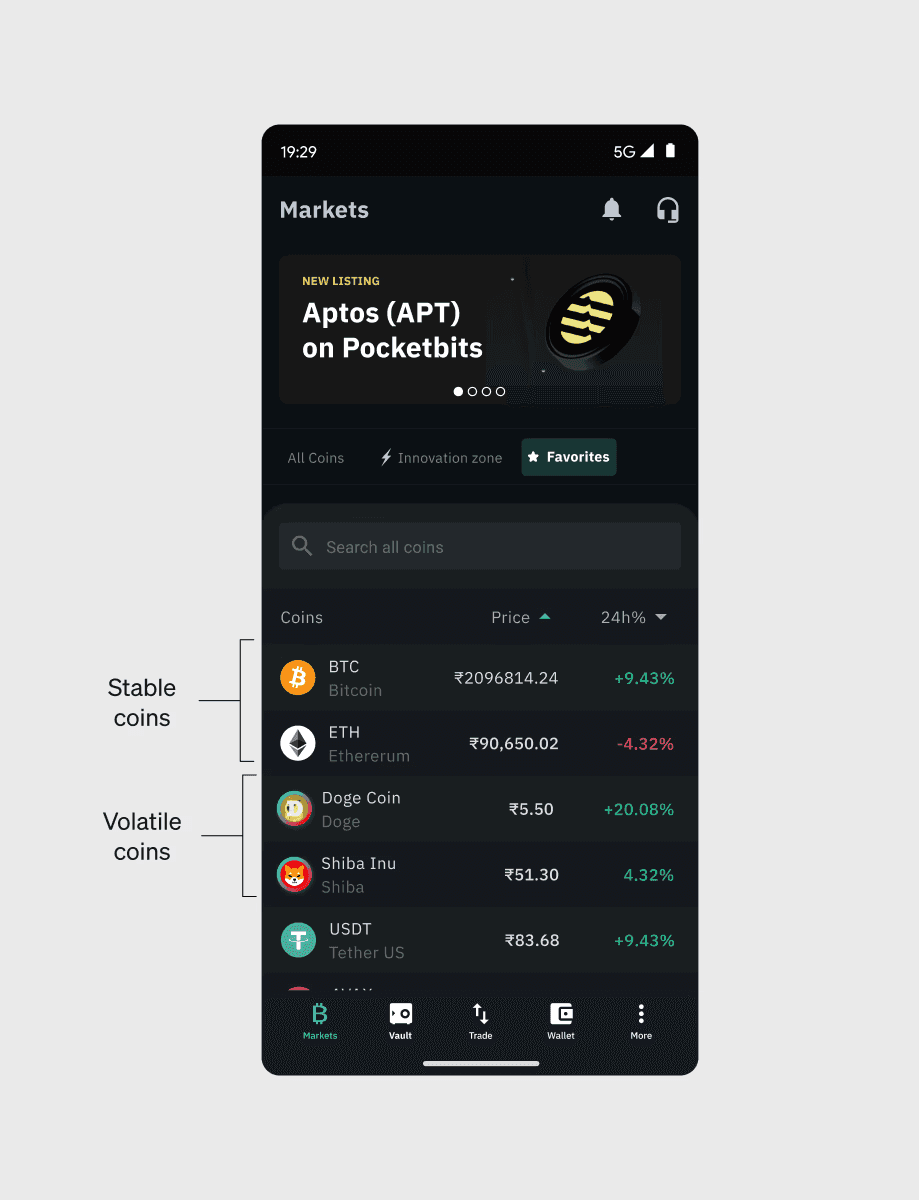
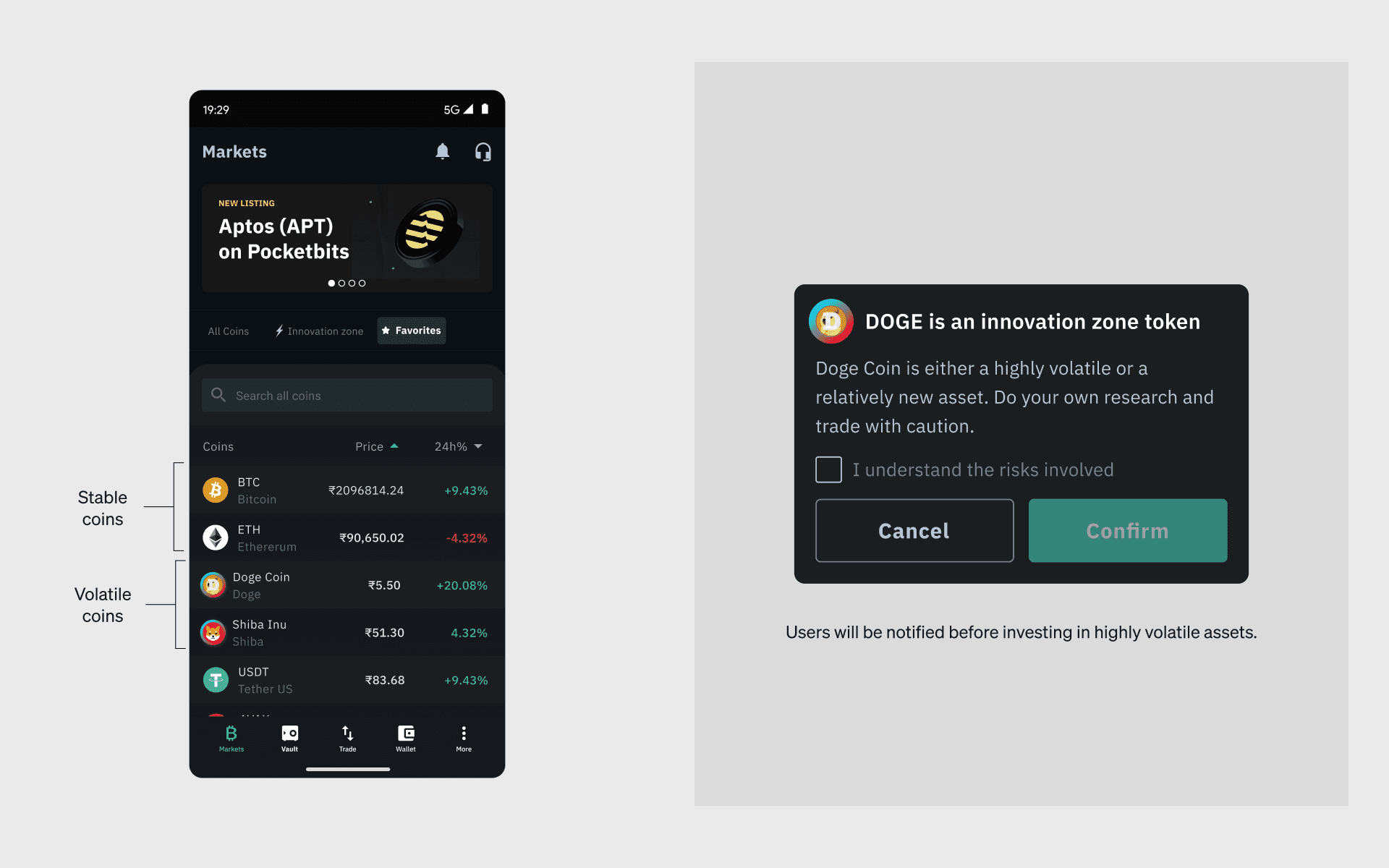
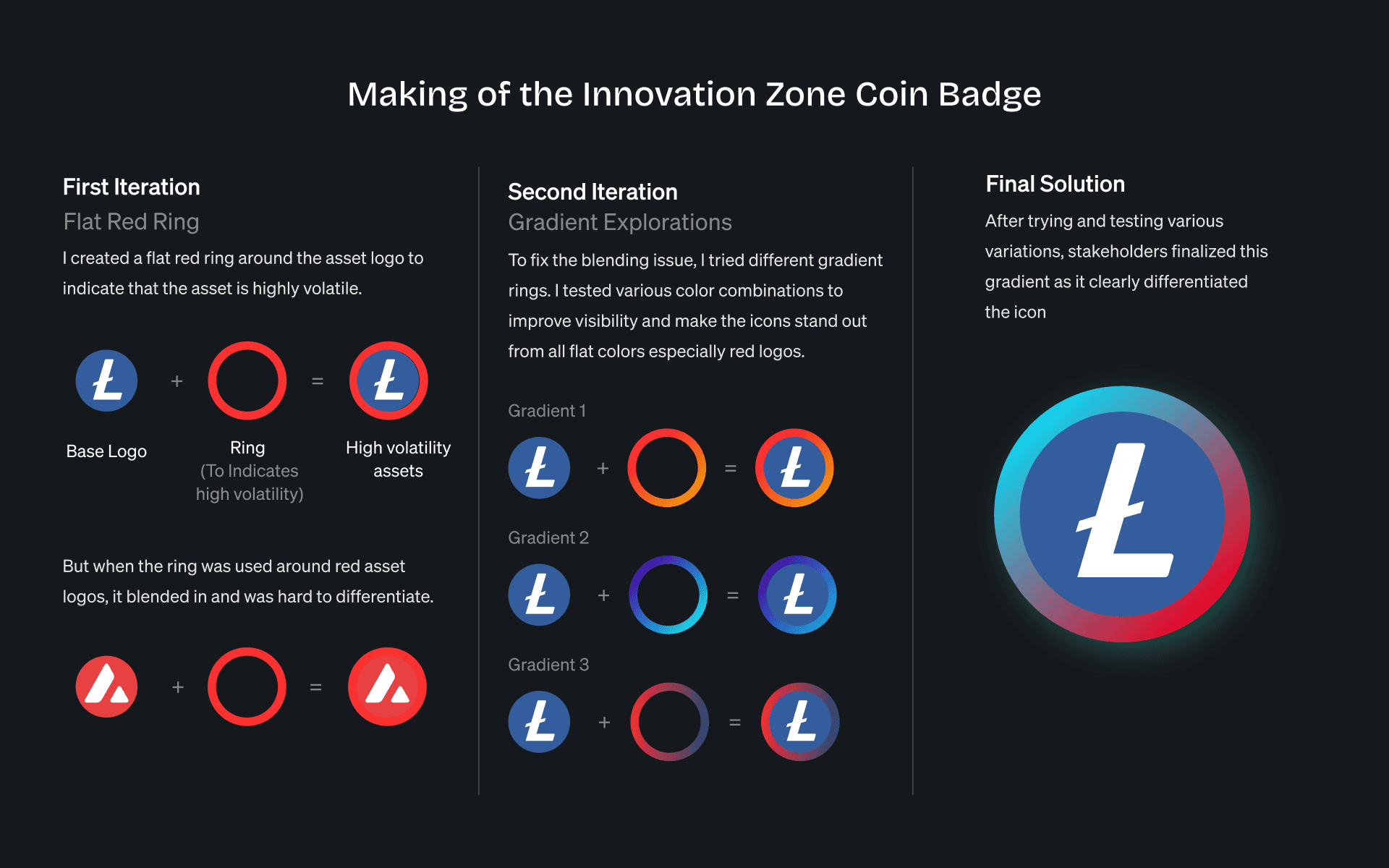
This solution came with a challenge—I wasn’t allowed to place any icon next to the asset name. The only viable option was to add a distinctive border around the asset’s logo to indicate it belonged to the Innovation Zone. The toughest (and most fun) part was finalizing the right border color. This subtle visual cue helped users identify high-risk assets without cluttering the interface
See the image below to understand how the Innovation Coin was designed.
Old Version
Users were unaware of the risks and often traded without understanding them, leading to significant losses of their funds. and there were no visual cues to warn them.
New Version
I added an Innovation Zone where new and volatile coins were listed and when clicked, users got a quick notification about high volatility, advising caution before trading.
In conclusion, by introducing the Innovation Zone with clear visual warnings, we empowered users to make informed decisions and avoid unnecessary losses.
Сhallenge #3
Slow Tranaction
Introducing Unified Payment Interface (UPI) Payment
In early 2021, Unified Payments Interface (UPI) payments were growing rapidly in India, and almost every fintech application was integrating UPI to improve transaction speed and convenience. To keep up with this trend, we decided to introduce a dedicated UPI deposit flow in the app.
I researched and took reference from leading fintech products like Kite and Groww, which had already mastered smooth and reliable UPI payment experiences. Based on those insights, I adapted the flow to fit our design system and made adjustments tailored to Pocketbits users
However, trouble began when the National Payments Corporation of India (NPCI), which operates UPI, distanced itself from cryptocurrency transactions. As a result, many banks stopped supporting UPI payments to crypto exchanges. This led to payment timeouts, failed transactions, delayed refunds, and growing user frustration
To address this, our CEO suggested providing clear feedback to users when a payment timed out. I designed real-time status messages and notifications to inform users about the transaction state, reducing confusion and helping manage expectations during payment failures
Learnings
Throughout this project, several lessons stood out that shaped both our process and outcomes
01
Understanding our younger, tech-savvy users allowed us to tailor features specifically to their needs and behaviors.
02
Making key features, like the Vault, more accessible drove higher user engagement.
03
Testing multiple design iterations ensured we delivered a scalable and user-approved final solution.
0
See What Else I've Worked On